
The problem we kept meeting
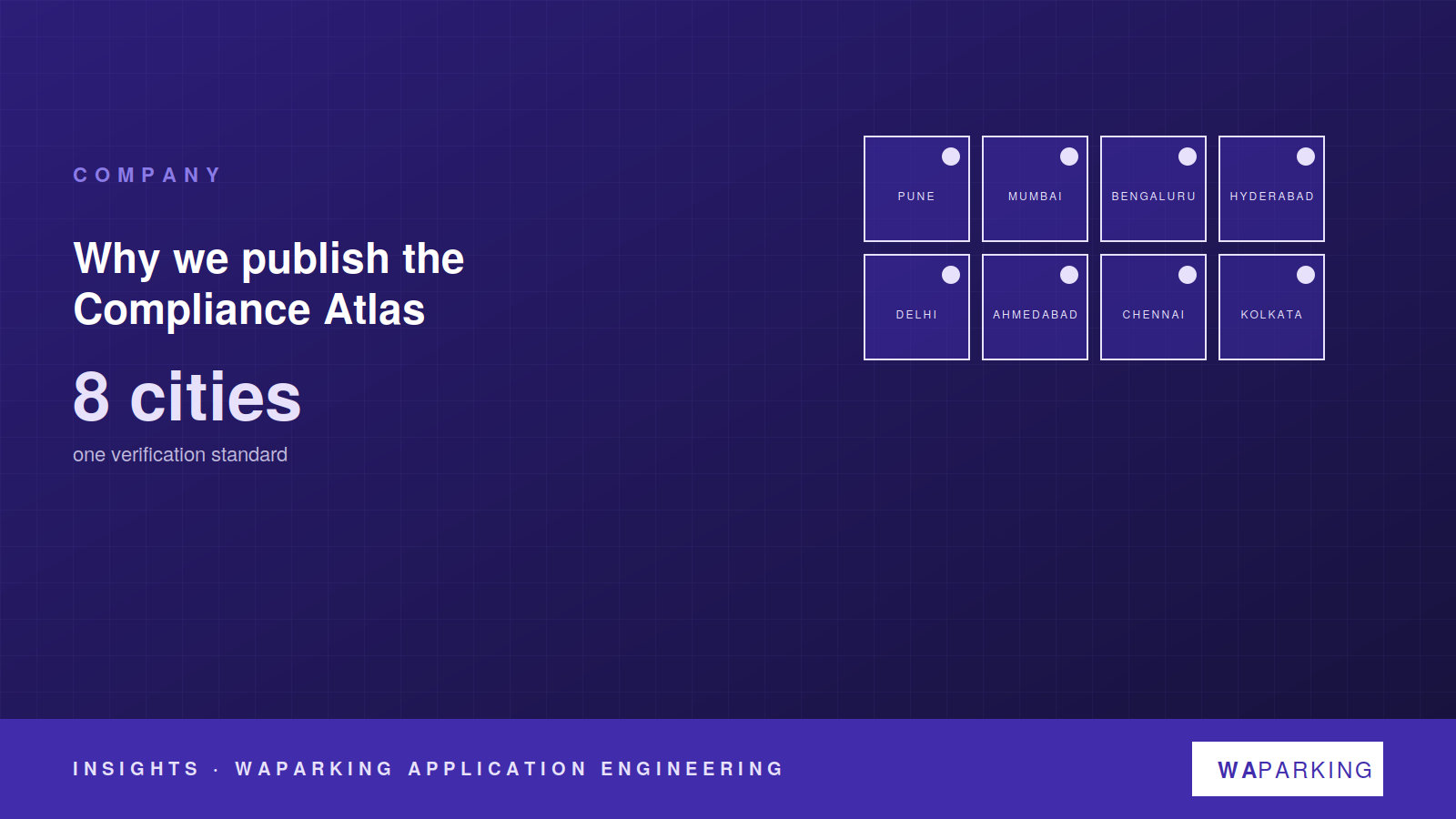
Every parking enquiry starts with the same question: how many bays does the regulation require? The answer lives in a different document in every city — UDCPR in Maharashtra, DCPR 2034 in Greater Mumbai, the Telangana Building Rules, TNCDBR in Tamil Nadu, KMC's rules in Kolkata, BBMP's bye-laws, CGDCR in Gujarat, the UBBL and Master Plan in Delhi. Consultants' summaries circulate for years after amendments; some still quote Mumbai's 1991 table.
An architect who designs to the wrong figure loses months at scrutiny. A developer who sizes a plot to it loses more.
What we built
The Compliance Atlas is a public reference: one page per city, with the requirement by building type, the two-wheeler and visitor loadings, the bay sizes, the mechanical-parking clause and its conditions, the fire rules that apply, and a dated log of every change since we verified it. A calculator runs on the verified rows.
The rule we hold to
A figure appears on the public page only when an application engineer has read it in the regulation and recorded the clause. Where our desk research found a figure in only one secondary source, the row is loaded but hidden until it is confirmed. Where we could not find it, the page says so — "in verification" — rather than guess.
That means some city pages launch with the mechanical-parking provisions verified and the requirement table still pending. We think that is more useful than a complete table nobody should trust.
What it is not
It is not a sanction, and it does not replace the regulation. Every row links to the clause so that the architect can cite the authority document, not us. When a requirement changes, we log the amendment, re-verify the affected rows and tell the people who asked to follow that city.
How to help
If your city is not published, ask for it on the Atlas page; verification order follows demand. If you find an error, tell us — with the clause. That is how the Atlas gets better.